Sunday, April 20, 2014

Reusable Water

Forget Plastic Bottles

Why are people wasting their money on disposable plastic water bottles when they have an unlimited supply of water 20 feet away in their sink? Some say convenience, some say it’s healthier, and some say it just tastes better. Some may think so; however they probably have never tried reusable bottles. In doing so they're actually hurting their health, their wallet, and the planet. 

Health Hazards of Plastic

Since you can buy them at a grocery store, it seems obvious that bottles of water would be much safer than that stuff coming from your faucet. That's not necessarily true. There are a lot of hazards and unknowns about bottled water that are concerning to the average American.
  • The FDA only regulates about 30-40% of bottled water. 
  • According to one study, 22% of tested brands had chemical levels above state limits.
  • Most plastic bottles contain BPA which can cause brain and reproductive dysfunction.
When purchasing a reusable bottle you can ensure that your bottles do not contain harmful BPA. You can also ensure that your water is safer and cleaner than the bottled water whose origin is a mystery. It's easy to find out if your area's water is safe. If you feel uncomfortable drinking from a tap, a sink filter is another cheap alternative. 

 Pocket Money


In the long run, purchasing a $20 reusable water bottle will save you so much money. Fun fact: Americans spend about as much money a year on disposable bottles as they do on engagement rings. There is a huge difference between the cost of bottled water and water from the tap. 

  • Bottled water costs 300-2000x more than tap water
  • Drinking the recommended 8 glasses of water per year costs…
    • $1,400 for bottled water
    • $0.50 for tap water
  • You can save $550 a year (one disposable bottle a day) by drinking from a reusable bottle

 The Environment


A switch to reusable water bottles can have a hugely positive impact on the environment. From production all the way through disposal, the use of regular plastic bottles is taking a toll on the planet. It also uses up some of our most precious resources to produce bottles of water. 
  • It takes over 50 million barrels of oil to produce and refrigerate bottled water. 
  • 3x the amount of water are used to produce a bottle than to fill it.
  • Over 80% of water bottles go to landfills.
  • When bottles decompose they release toxic chemicals.
  • Plastic bottles and bags make up the majority of ocean and beach litter.
As a whole, it is a good decision to switch from disposable plastic water bottles to reusable ones. They're safer, cheaper, and more environmentally friendly. It's a pretty easy choice to make, so what's stopping you?

Tuesday, April 15, 2014

Sustainability Professionals

As World Becomes Greener, Demand for Sustainable Professionals Grows
Just a few years ago jobs in sustainability weren't prominent. There were few institutions that began a focus on sustainability but you could hardly call anybody a professional. Today, everything has changed. Nearly all towns, school districts, universities, government agencies and corporations have somebody managing sustainability initiatives. Consequently the demand for workers in sustainability jobs have skyrocketed.

What makes a sustainability professional?

Sustainability professionals are in charge of leading green initiatives in their business or organization. Because this is still a new idea to many, it can be difficult to know what a sustainability professional needs to be successful. Some of these important traits include:


  • Diversity: Companies looking for sustainability workers want to see that they have worked for different sectors, companies, and on different projects. They feel that it gives them the well-rounded knowledge they will need as innovators in the company.
  • Vision: Sustainability people need vision. They need to think differently than everyone else to be able to take on their challenges and attack them in a new way. 
  • Specialists: While professionals must be knowledgeable about different topics, they must have at least one area of expertise. Especially as sustainability departments within businesses and organizations grow.
  • Leadership: For many businesses and organizations, creating a greener company comes with the need for a full overhaul . For this, one must be a firm leader willing to take action and bring about that change. 
  • Business Knowledge: The bottom line is that a company wants to make money. It's great to have awesome ideas but if they are not going to be financially effective for the organization, they are essentially useless. A person going into sustainability should have some background and education in the business world so they can meld the two together. 


Going into a career in sustainability might not have ever been something that you thought would be for you. However, with the growth of job availability in all industries, anyone can find the right fit for them. It might be a good idea to think about making the switch over to a job helping to save the planet, one business at a time. 

Wednesday, April 9, 2014

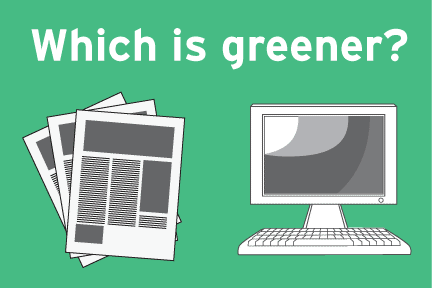
Digital Vs. Paper

Digital is more sustainable than paper...

Or so you thought.

For the last few years companies have been drastically changing their practices to use less paper. The reasoning behind the change is to be more sustainable and to save trees. Now, everything is digital. Books, bills, newspapers, even receipts are available online or emailed directly to you. There is a stigma against using paper, because it is bad for the environment.

However, is paper really as horrible as people make it out to be? 

Not necessarily. And now non-profit groups are out to prove it. The large claim against paper is that the manufacturing of it is leading to deforestation. While this may have been true in the past, a large portion of paper being sold is actually recycled, meaning fewer new trees are being cut down than planted.
  • In 2011 66.8% of paper used was recycled. 
  • Forest coverage from Minnesota to Maine has increased by 28% in the past century (US Department of Agriculture). 

It's easy to say that digital is more sustainable than paper because you can use it over and over again for new information, while paper updates are constantly reprinted. A few important things to keep in mind about digital media:
  • Manufacturing any electronic products leaves a carbon footprint
  • It takes a lot of energy to power electronics and this energy adds to our carbon footprint as well
  • E-Waste is a serious issue and causes health hazards to humans, especially in developing countries

Which is better?

It is difficult to determine exactly which medium, digital or paper, is better for the environment. Because they are so different and because digital is so much newer than paper it will take years to accurately measure the two to compare them. 

Although there is no way to decide which type of publishing is better for the environment, it is certain that moving away from paper and going digital is more cost-effective for companies. For this reason, we will surely continue to see companies moving toward digital. 

Next time a company says they are going paperless to help the environment, remember that this is not necessarily the case. The company is probably just trying to maximize their profits. 

Sunday, March 30, 2014

Plastic Bag Bans

Plastic Bag Bans Sweep Across Massachusetts

Legislation is being created across the state of Massachusetts and the rest of the nation to stop the use of plastic bags in stores. Rather, shoppers would be in charge of bringing their own reusable bags on their trips. So far bans exist in Brookline, Great Barrington, Manchester, and Nantucket with another ban pending in Cambridge. 

Why Ban?

Plastic bags can do a great deal of harm to the environment. 

  • Every year, 500 billion to 1 trillion plastic bags are used and most of them end up as litter. 
  • The bags can take 20 to 1,000 years to degrade and even after they have degraded, they are still toxic. 
  • Bags find their way into the ocean and fish and other sea creatures are killed. 
  • As the bags break down, marine animals ingest the toxins. Humans then indirectly consume them when they eat seafood.

Logistics

Bans currently exist in 4 municipalities in Massachusetts. Some state officials are hoping that a universal ban on the bags will be implemented by 2015.


Brookline:

The ban was approved in 2012 and went into effect in December of 2013. 
The ban includes plastic bags and polystyrene containers. About 70 businesses and 350 food service establishments have been affected by these bans. Officials are optimistic that the ban will go smoothly as businesses transition. 

Great Barrington:

In May 2013 the ban was approved by the town and it went into effect on March 1st, 2014. 
The ban in Great Barrington prohibits, "thin film, single-use plastic checkout bags." Bags such as those used for dry cleaning, trash, bulk produce, and other similar bags are exempt through the provision. Businesses who break the ban will be fined $50 dollars each day until they correct it, then fines increase for further violations. So far, there is widespread compliance with the rule. 

Manchester-by-the-Sea:

Manchester voted to ban bags in local stores in April of 2013. The ban went into effect on July 1st.
With over a two-thirds majority, the legislation passed easily. The bill in Manchester is similar to the rest of the bans which contain some provisions allowing certain bags to be used. 

Nantucket:

Nantucket was the first place in Massachusetts to ban the use of plastic bags, way back in 1990. 
They mandated that businesses use biodegradable packaging. It took over 20 years for other towns to get on board with the ban. After so long, having no plastic bags in Nantucket has become a way of life and people hardly even notice it anymore. 

Who Will Be Next?

There are many towns in Massachusetts that are currently contemplating the bag ban. Who will be the next to follow the trend and ban the bags? Within the next few years don't be surprised if you find yourself at the register being asked "Paper... or paper?" 


Thursday, March 27, 2014

E-Waste

What is E-Waste?

E-Waste consists of discarded electronics such as:

  • Computers
  • Office equipment
  • Entertainment devices
  • Mobile phones, 
  • Televisions
  • Refrigerators
  • And more
These electronics are improperly thrown into the garbage and sent to landfills or burned. Over the past decade, the amount of e-waste has increased exponentially due to the growing popularity of technology and the constant updating of new software causing people to replace their old devices with new ones. 


Why is it an issue?

E-waste isn't just any old trash. It contains toxic substances such as:

  •  Lead
  •  Mercury 
  • Arsenic 
  • Cadmium 
  • Beryllium
 When the waste is burnt to dispose of it, the toxins are let into the air. These toxins have been proven to cause numerous diseases such as cancer, reproductive disorders, and endocrine disorders among others. Some of the toxins do not even break down, but rather accumulate in the food chain and biosphere. The high number of toxins present a risk to the community and the ecosystem. 

Facts about E-Waste

  • E-waste is equal to 2% of trash in landfills but 70% of overall waste
  • Every year, phones containing over $60 million worth of gold or silver are thrown into the trash
  • Only 12.5% of E-waste is currently recycled
  • E-waste is the fastest growing municipal waste stream in the US
  • The United States' E-waste ends up in Africa, India, and China
  • Global E-waste is supposed to grow 8% per year

How can you help?


Reduce: 

Instead of always buying the brand new gadgets as they come out, wait until your old electronics are not working well anymore. Take better care of them if you're one to always break your phone or other device. That way you won't have to constantly get new ones. You'll also be saving yourself a lot of money in doing so. 


Reuse:

Maybe you don't want that old iPhone 4 anymore but there are plenty of people out there that do. Think about donating your phone or even trading it in. Goodwill has a program where they donate or sell computers and other technology to aid the community in job training and building employment opportunities. There are also programs like Cell Phone for Soldiers, March of Dimes, and Keep America Beautiful that collect cell phones for those who need them. 


Recycle

There are many organizations out there today that will take your old electronics and recycle them properly. They ensure that they are sent to proper facilities that can handle these electronics and know how to safely dispose of them. Check out locations near you


Saturday, March 1, 2014

What the Frack?

There's a new "F" word in town...

Fracking has been around for awhile, always causing its fair share of controversy. Activists in states around the United States are fighting hard against the practice. However, most people have no idea what fracking is.

So what exactly is fracking?

That's a good question, and a lot of people couldn't answer it. Fracking is a nickname for high-volume horizontal hydraulic fracturing. Right now you're probably still thinking "what the frack." 

Basically fracking is a new drilling technology that allows us to reach natural gas. Drillers, use sand, water, and chemicals and inject them inside of shale rock. This high pressure releases the gas inside. 

Okay cool, so fracking is just a new way to get gas right? Yes and no. Yes, fracking is a new way to reach natural gases. No, not just, there are A LOT of dangers to this form of drilling, hence all the controversy around this new form of technology and why activists everywhere are fighting against it. 

What's so dangerous about it?

There are numerous documented side effects of the fracking process that put our water, air, and overall health at risk. These dangers include::

  • 40,000 gallons of chemicals used per fracturing.
  • Methane gas and toxic chemicals contaminate groundwater.
  • Drinking water contamination causing sensory, respiratory, and neurological damage.
  • Small earth tremors caused by the process.
Everyday 300,000 barrels of natural gas are produced by fracking, so it's easy to see why the process has become so popular. However, the immense health and environmental risks that stem from the process may not be worth it. 

The debate will surely continue on as pro and anti-fracking advocates fight over the future of the process. 

Tuesday, February 25, 2014

Tips for Greener Shopping

Shop Green, Live Happy

Buying green means shopping with the environment in your mind and really thinking about each thing you are putting into your cart as you go up and down the aisles. Many shoppers do not do this and it is hurting not only the environment, but their own wallets. Because of this, I have compiled a list of five main tips to keep in mind at your next trip to the grocery store:

1. Buy Durable- Be sure to buy products that are going to last you a long time. Rather than having to constantly go back out to the store to purchase small items. Right now, these products are more expensive but in the long run they will save you money. Some good examples include reusable cups rather than paper or plastic and rechargeable batteries rather than disposable. 

2. Buy Used- Used products can be just as good as new products, and they're almost always significantly cheaper. These used products are not wasting packaging like newer products as well. Take a day to travel around thrift shops and flea markets; you never know what amazing steals you'll find. 

3. Buy Local- When it comes to produce purchases, try to buy from local farmers. In doing so, you can guarantee that the food you are eating is not treated with chemicals and is fresher overall. Supporting local farms and giving them business will help spur your local economy. Rather than wasting the packaging and energy that large scale factory farms must use to ship their produce, you are purchasing right from the source. 

4. Buy Online- There are a number of green online retailers out there. You are saving the energy emissions from travelling to the mall or store by ordering products online. In addition, you can be sure that the vendor you are purchasing from is a reputable source that you can trust is eco-friendly. 

5. Don't Buy- The best tip I can give is don't buy at all. There are thousands of DIY projects out there to recycle and upcycle old belongings into useful objects to use around the house. Things that you may have normally thrown away or sold in a yard sale can be turned into something brand new. 


Everybody can be a "green" shopper if they follow these simple tasks and put a little more thought into their shopping trips. So next time you're planning on going to the store, make sure it's a necessary trip